
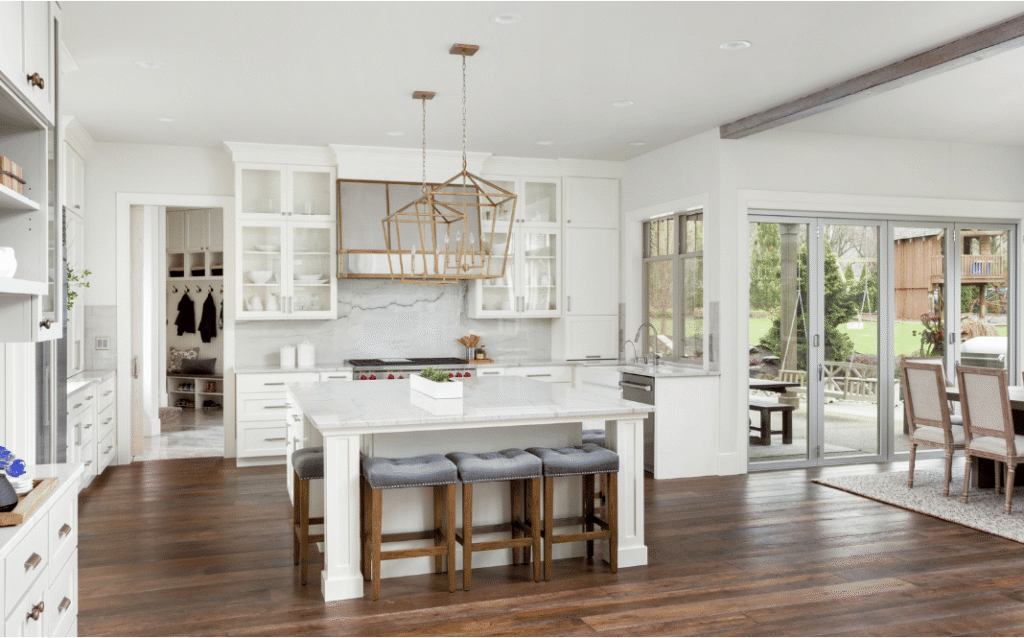
The kitchen has always been the heart of the home but what homeowners expect from it has changed significantly. Gone are the days of purely white, minimalist spaces that looked impressive but felt impersonal. Across Ontario, homeowners are investing in kitchens that genuinely work for the way they live: spaces that accommodate family gatherings, remote work, entertaining, and everyday cooking all at once.
Whether you’re planning a complete kitchen remodel or a focused upgrade, staying current on design trends helps you make smarter decisions. A well-designed kitchen doesn’t just look good, it adds measurable value to your home and makes daily life more enjoyable. The right choices now can also save money down the road by reducing the need for frequent updates.
This guide covers the nine kitchen design trends Ontario homeowners are embracing in 2026, plus practical advice on how to choose the right approach for your home.
1. Warm, Natural Kitchen Designs Are Replacing Cold Minimalism
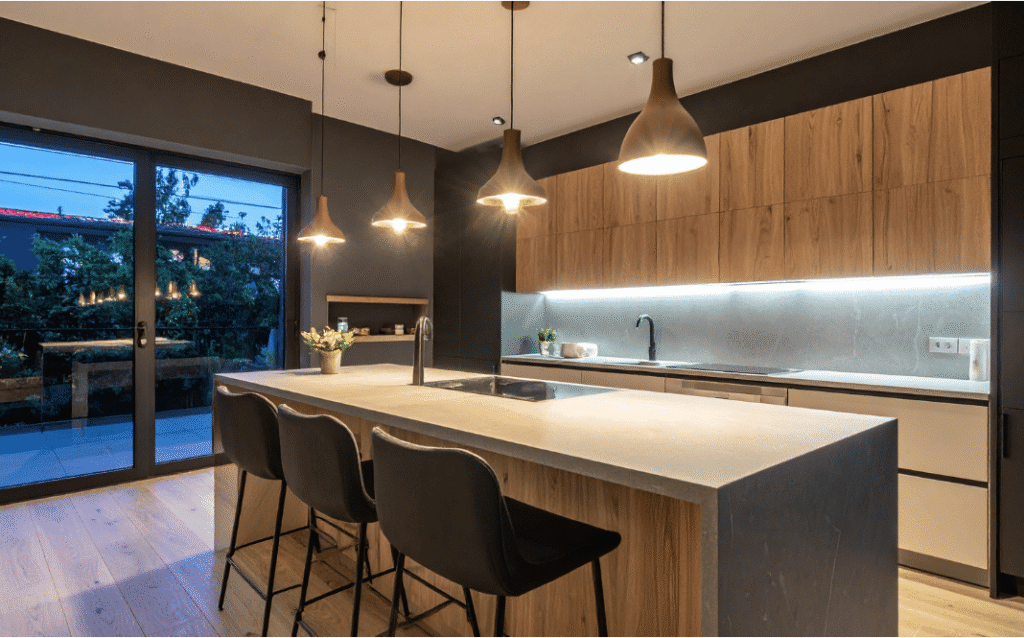
The sterile, all-white kitchen had its moment—but homeowners are moving on. The dominant shift in 2026 is toward warmth: natural wood cabinetry, earth tones, warm neutrals, and natural stone textures that bring character and comfort to the space.
This trend works because it makes kitchens feel genuinely inviting rather than staged. Natural materials age gracefully and pair well with open-concept layouts, where the kitchen flows into living and dining areas. Rather than fighting for visual attention, warm kitchens settle into the home and feel like they belong there.
Expect to see white oak, walnut, and beige tones replacing stark whites and greys. These choices feel timeless rather than trendy—a smart consideration for any renovation with long-term resale value in mind.
2. Large Kitchen Islands Designed for More Than Cooking
The kitchen island has evolved. What was once a simple prep surface is now the functional centerpiece of modern home design. Homeowners in 2026 are building islands that serve multiple roles simultaneously—and they’re doing it with intention.
Popular island features include:
- Built-in storage for pots, cookware, and pantry overflow
- Seating areas that double as casual dining spaces
- Waterfall countertops for a sleek, high-end finish
- Prep sinks to keep the main sink clear during cooking
- Beverage stations with wine fridges or coffee bar setups
Families use islands for homework and working from home. Hosts use them as a natural gathering point during dinner parties. For anyone with an open-concept home, the island also creates a soft boundary between the kitchen and living space without requiring walls.
If you’re planning a kitchen renovation, the island deserves serious design attention—it’s often the feature that defines the whole room.
3. Hidden Storage Solutions for a Cleaner Kitchen
Clutter is the enemy of a functional kitchen. Modern kitchen design in 2026 addresses this head-on with clever built-in storage systems that keep countertops clear and everything within reach.
Popular storage upgrades include:
- Pull-out pantry cabinets that maximize corner and narrow spaces
- Appliance garages that hide toasters, coffee machines, and blenders
- Deep drawers for pots, pans, and bulky items
- Custom drawer organizers for cutlery and utensils
- Built-in spice racks and hidden waste bins
Smart storage makes a real difference in smaller kitchens. When every item has a dedicated, concealed spot, the kitchen feels more spacious—not because it’s bigger, but because it’s organized. This is one of the most cost-effective ways to improve a kitchen’s functionality without changing its footprint.
4. Bold Cabinet Colours Are Becoming More Popular
White cabinetry isn’t disappearing, but it’s no longer the default. Homeowners are increasingly choosing cabinet colours that add personality and depth to their kitchens.
Trending cabinet colours in 2026 include:
- Deep greens (sage, forest, and hunter)
- Navy blue
- Charcoal and slate grey
- Natural wood finishes in honey and walnut tones
- Two-tone combinations
Two-tone cabinetry—dark lower cabinets paired with lighter uppers, or wood accents alongside painted finishes—has become particularly popular. This approach adds visual interest without overwhelming the space. It also allows homeowners to incorporate colour confidently, knowing the lighter uppers keep the room from feeling heavy.
Bold cabinets pair well with warm countertops, brass or matte black hardware, and natural lighting.
5. Quartz Countertops Continue to Dominate Kitchen Renovations
Quartz has held its position as the most popular countertop material for several years—and 2026 is no different. The reasons are straightforward: quartz is durable, low-maintenance, resistant to staining and scratching, and available in a wide range of designs that suit almost any kitchen style.
Popular quartz styles include:
- Marble-look quartz that delivers the aesthetic of natural stone without the upkeep
- Neutral tones in white, cream, and greige that complement warm cabinetry
- Large-format slabs with minimal seaming for a seamless, high-end look
For Ontario homeowners weighing their countertop options, quartz offers the best balance of appearance and practicality. Natural marble is beautiful but porous and high-maintenance. Granite requires periodic sealing. Quartz delivers comparable visual appeal with significantly less effort over time.
6. Smart Kitchen Technology for Modern Homes
Technology is becoming a standard part of kitchen design rather than an optional add-on. Homeowners renovating in 2026 are integrating smart features from the start, making it easier to incorporate them cleanly into the overall design.
Commonly added features include:
- Smart appliances with app connectivity and programmable settings
- Touchless faucets for better hygiene and convenience
- Under-cabinet LED lighting for task illumination and ambiance
- Built-in charging stations concealed in drawers or islands
- Energy-efficient appliances that reduce utility costs over time
The convenience factor is significant. Being able to preheat an oven remotely, adjust lighting without touching a switch, or keep devices charged without a visible cable tangle improves daily kitchen use in small but meaningful ways. Energy-efficient appliances, meanwhile, offer long-term savings that offset their higher upfront cost.
7. Statement Lighting Adds Personality to Kitchen Design
Lighting is no longer an afterthought—it’s a design feature. In 2026, homeowners are using lighting strategically to define zones, highlight materials, and set the mood throughout the kitchen.
Popular lighting choices include:
- Oversized pendant lights above islands and dining areas
- Decorative fixtures that serve as focal points
- Layered lighting that combines ambient, task, and accent sources
- LED cabinet lighting to illuminate countertop workspaces and display areas
The right lighting improves how a kitchen looks and functions simultaneously. Warm-toned pendants above an island create an inviting atmosphere for entertaining. Under-cabinet LEDs make food prep safer and more precise. A well-lit kitchen also photographs better—a relevant consideration for homeowners thinking about resale.
When selecting fixtures, proportion matters. Oversized pendants suit large islands; smaller pendants work better above narrower breakfast bars.
8. Open-Concept Kitchens With Better Defined Spaces
Open-concept layouts remain popular, but homeowners are refining the approach. Rather than one undifferentiated open space, the trend in 2026 is to create visual separation between the kitchen, dining, and living areas—without adding walls.
Effective ways to define spaces include:
- Kitchen islands acting as natural room dividers
- Partial walls or half-walls that maintain openness while creating boundaries
- Built-in shelving used to frame the kitchen’s perimeter
- Different flooring materials that signal transitions between zones
This approach gives open-concept homes the benefits of a connected layout—natural light, social flow, easier supervision of children—while making each space feel more intentional. A kitchen that bleeds seamlessly into a living room can feel chaotic; one with thoughtful boundaries feels cohesive.
9. Sustainable Kitchen Materials and Energy Efficiency
Environmental considerations are playing a larger role in renovation decisions. Homeowners in 2026 are paying closer attention to the materials they choose and the long-term costs of those choices.
Sustainable kitchen features gaining traction include:
- Energy-efficient appliances with ENERGY STAR certification
- Durable materials chosen for longevity rather than current popularity
- LED lighting throughout, which consumes significantly less energy than traditional bulbs
- Long-lasting finishes on cabinetry and countertops that don’t need frequent replacing
There’s a practical argument here beyond environmental motivation: choosing quality materials reduces the total cost of ownership. A kitchen built with durable, timeless components will look and function well for decades, whereas one built around fast trends may require costly updates within a few years.
How to Choose the Right Kitchen Design for Your Home
With so many strong directions available, how do you decide what’s right for your specific home? A few guiding principles help:
Consider your lifestyle first. A family with young children needs different storage and surface solutions than a couple who entertains frequently. Design around how you actually use the kitchen, not just how you want it to look.
Assess your storage needs honestly. Identify what’s currently working and what isn’t. A kitchen that functions poorly rarely improves without addressing storage at the renovation stage.
Set a realistic budget before you start. Kitchen renovations vary widely in cost depending on scope, materials, and labour. Having a clear budget from the beginning prevents mid-project compromises that affect quality.
Favour timeless over trendy. Bold choices—dark cabinets, natural wood, quartz countertops—can feel current without being tied to a single moment in design history. Trends that feel very specific to a year tend to look dated quickly.
Work with an experienced renovation contractor. A skilled contractor brings both design knowledge and practical construction expertise. This combination reduces the risk of costly mistakes and ensures the finished kitchen matches the original vision.
Upgrade Your Kitchen With a Professional Renovation Contractor
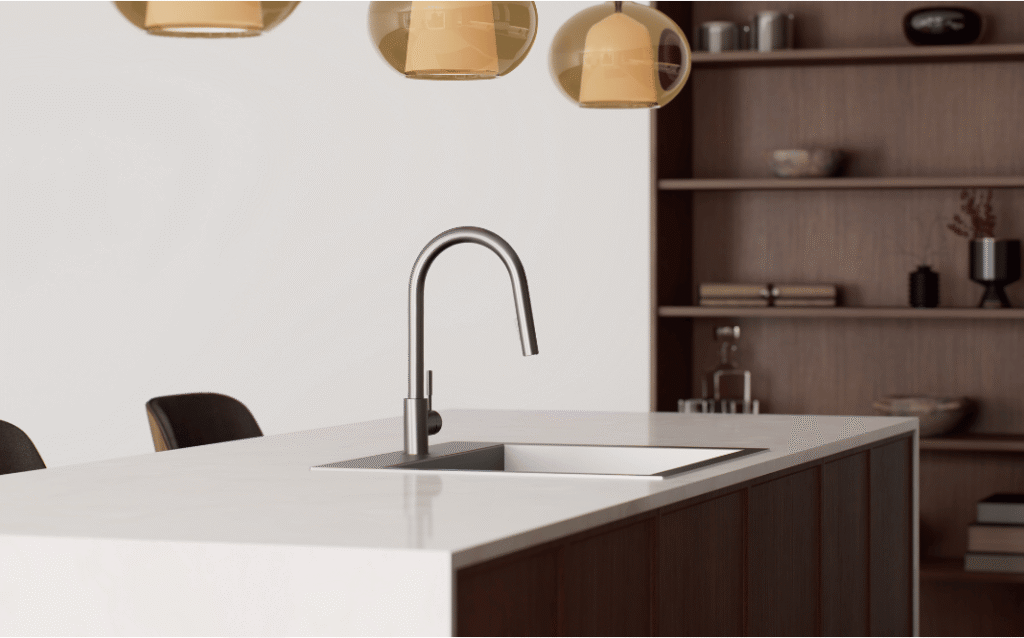
A thoughtfully designed kitchen improves daily life, makes the home more enjoyable, and adds real value to the property. The trends covered here—natural materials, functional islands, smart storage, bold colour, durable countertops, integrated technology, and sustainable choices—represent where kitchen design is headed, and where it’s likely to stay.
Coronation Construction helps Ontario homeowners create customized kitchen renovations built around their specific needs, lifestyle, and budget. Whether you’re starting from scratch or upgrading key elements, our team brings the expertise to make it happen properly.
Ready to start planning your kitchen renovation? Contact Coronation Construction today to discuss your project.